
Activated Carbon in Gold Extraction: Why Coconut Shell Activated Carbon is Essential for Gold Recovery
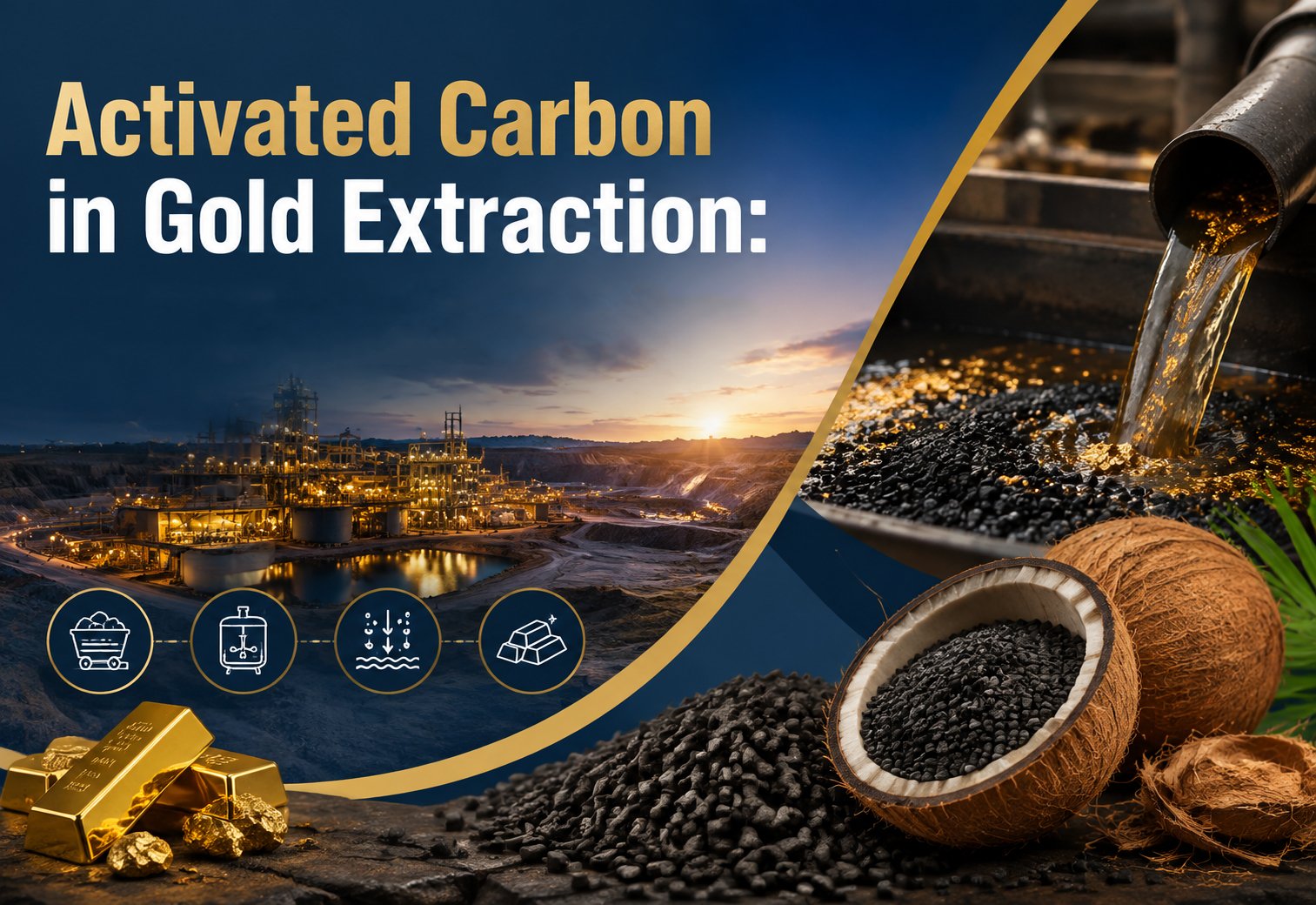
From gold cyanidation to Carbon-in-Pulp (CIP) and Carbon-in-Leach (CIL) processes, coconut shell activated carbon has become one of the most important materials in modern gold recovery operations.
Gold, one of the earliest precious metals discovered and utilized by humans, continues to play a vital role in currency reserves, electronics, medical applications, and jewelry manufacturing. Global gold demand exceeds 4,000 tons annually, and more than 70% of the world’s gold production relies on cyanide-based extraction technology.
Within this process, activated carbon—especially high-quality coconut shell activated carbon—acts as a highly efficient “gold recovery medium,” capturing dissolved gold complexes from cyanide solutions and enabling their recovery into pure gold.
This article explains the working principles of activated carbon in gold extraction, the advantages of coconut shell activated carbon, major gold recovery processes, and how to select the right activated carbon for mining applications.
Development of Activated Carbon Technology in Gold Recovery
The use of activated carbon for gold recovery dates back to the late 19th century. In 1894, American mining engineer John McCarty pioneered the use of activated carbon to recover gold from cyanide solutions, marking the beginning of carbon-based gold extraction technology.
Over the past century, activated carbon gold recovery technology has continuously evolved from heap leaching to Carbon-in-Pulp (CIP) and Carbon-in-Leach (CIL) processes. Today, it has become one of the most widely adopted gold extraction methods in the global mining industry.
How Does Activated Carbon Recover Gold?
Gold Cyanidation Process
The first stage of modern gold extraction is cyanide leaching.
After gold-bearing ore is crushed and ground, it is mixed with sodium cyanide (NaCN) solution in the presence of oxygen. Gold is oxidized and converted into a stable soluble gold cyanide complex:
4Au + 8NaCN + O₂ + 2H₂O → 4Na[Au(CN)₂] + 4NaOH
The generated gold cyanide complex (Au(CN)₂⁻) remains dissolved in the solution without precipitation. This chemical stability makes cyanidation highly effective for gold extraction.
However, it also creates the need for a material capable of selectively capturing these dissolved gold complexes—this is where activated carbon plays a critical role.
Gold Adsorption Mechanism of Activated Carbon
Activated carbon can efficiently adsorb gold cyanide complexes through several mechanisms:
1. Physical Adsorption
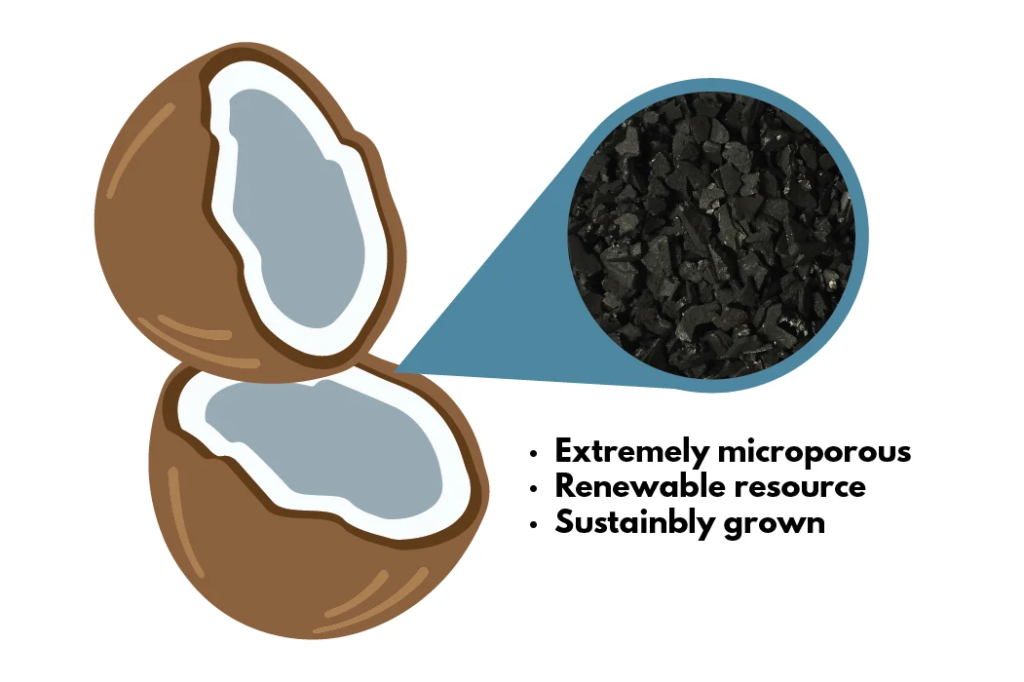
Activated carbon has a highly developed microporous structure with a large surface area, typically ranging from 900–1200 m²/g.
These microscopic pores provide enormous adsorption space. Gold cyanide complexes enter the pores and are retained through intermolecular forces such as van der Waals interactions.
2. Chemical Adsorption
The surface of activated carbon contains oxygen-containing functional groups, including hydroxyl, carboxyl, and carbonyl groups.
These active sites interact with gold cyanide complexes through ion exchange and coordination reactions, strengthening gold adsorption and improving recovery efficiency.
3. Selective Adsorption of Gold
One of the most valuable characteristics of activated carbon is its selectivity.
In cyanide solutions containing multiple metal ions such as silver, copper, and zinc, activated carbon preferentially adsorbs gold cyanide complexes (Au(CN)₂⁻).
This selective adsorption capability enables mining operations to achieve extremely high gold recovery rates, commonly reaching 97%–99.5%.
Why Coconut Shell Activated Carbon is Preferred for Gold Extraction
Among different activated carbon raw materials, coconut shell activated carbon has become the industry standard for gold recovery due to its unique physical and chemical properties.
1. High Hardness and Excellent Abrasion Resistance
Gold processing plants usually use mechanical agitation tanks where activated carbon particles continuously move under strong hydraulic forces.
Low-quality activated carbon can easily break into fine powder, causing:
- Gold loss through carbon fines leakage
- Pipeline and screen blockage
- Increased operating costs
Coconut shell activated carbon has a naturally dense carbon structure, providing excellent mechanical strength and abrasion resistance, making it ideal for harsh gold recovery environments.
2. Optimized Micropore Structure and Fast Adsorption Rate
Coconut shell activated carbon mainly contains micropores, which are highly suitable for the molecular size of gold cyanide complexes.
This optimized pore distribution allows Au(CN)₂⁻ ions to quickly enter the carbon structure and achieve efficient adsorption.
Compared with other activated carbon types:
- Coal-based activated carbon usually has larger pores and slower adsorption performance.
- Wood-based activated carbon generally has lower mechanical strength and is less suitable for industrial gold recovery.
Therefore, coconut shell activated carbon remains the preferred choice for large-scale mining applications.
3. Low Ash Content and High Purity
High-quality coconut shell activated carbon usually has an ash content below 5%, significantly lower than many coal-based activated carbons.
Mineral impurities such as silicon, aluminum, and iron contained in ash may react with chemicals in cyanide solutions, increasing reagent consumption and production costs.
Lower ash content helps maintain stable gold recovery performance.
4. High Iodine Value and Large Adsorption Capacity
Premium coconut shell activated carbon typically has an iodine value of 1000–1200 mg/g.
Its gold loading capacity can reach approximately:
3000–6000 g of gold per ton of activated carbon
The higher adsorption capacity means mining companies can process more ore with less carbon consumption, reducing both equipment investment and operating costs.
Key Performance Indicators of Gold Recovery Activated Carbon
There are many activated carbon products available on the market, but not all types are suitable for gold extraction applications.
When selecting activated carbon for gold recovery, mining companies should pay close attention to the following key performance parameters:
Iodine Value (mg/g)
- Standard requirement: ≥900 mg/g
- Premium grade: ≥1000 mg/g
A higher iodine value generally indicates a more developed microporous structure and stronger adsorption capability.
Abrasion Resistance / Hardness
- Recommended strength: ≥95%
High abrasion resistance reduces carbon loss caused by particle breakage and minimizes the generation of carbon fines during agitation.
Specific Surface Area
- Typical range: 900–1200 m²/g
A larger surface area provides more active adsorption sites for gold cyanide complexes.
Ash Content
- Recommended: ≤5%
Lower ash content improves chemical stability and reduces unwanted reactions during cyanide leaching.
Bulk Density
- Typical range: 38–0.45 g/mL
Proper bulk density helps optimize carbon circulation and separation efficiency.
pH Value
- Recommended range: 6–8
Neutral to slightly alkaline activated carbon is generally preferred for gold recovery applications.
Particle Size Distribution
Common sizes include:
- 6×12 mesh (1.68–3.35 mm)
The ideal particle size depends on the design of the adsorption tanks and carbon transfer system.
Gold Loading Capacity
- Standard grade: ≥2000 g Au/ton activated carbon
- Premium grade: ≥3000 g Au/ton activated carbon
Higher gold loading capacity helps reduce carbon consumption and improves overall economic efficiency.
Gold Recovery Process: CIP and CIL Technology
Modern gold extraction mainly uses two activated carbon-based technologies:
- Carbon-in-Pulp (CIP)
- Carbon-in-Leach (CIL)
Both processes rely on coconut shell activated carbon to recover dissolved gold from cyanide solutions.
Carbon-in-Pulp (CIP) Process
Carbon-in-Pulp is one of the earliest and most mature activated carbon gold recovery technologies.
The typical process includes:
1. Crushing and Grinding
Gold-bearing ore is crushed and ground into fine particles, usually below 0.074 mm (approximately 200 mesh).
2. Cyanide Leaching
The ore slurry is mixed with sodium cyanide solution under controlled conditions. Gold dissolves and forms soluble gold cyanide complexes (Au(CN)₂⁻).
3. Activated Carbon Adsorption
Fine coconut shell activated carbon is added into a series of adsorption tanks, usually arranged in multiple stages.
The activated carbon moves counter-currently with the slurry, efficiently capturing dissolved gold complexes.
4. Gold Desorption from Loaded Carbon
Once activated carbon becomes saturated with gold, it enters the elution process.
A hot cyanide and sodium hydroxide solution is used to strip gold from the carbon surface, producing a gold-rich solution.
5. Electrowinning
The gold-bearing solution passes through an electrolytic cell, where gold is deposited onto stainless steel cathodes.
6. Smelting
The collected gold sludge is melted in a high-frequency induction furnace and cast into gold bars with a purity typically above 99.99% Au.
7. Carbon Regeneration
After gold removal, activated carbon undergoes thermal regeneration at approximately 700°C to restore adsorption capacity and return to the recovery circuit.
Carbon-in-Leach (CIL) Process
Carbon-in-Leach is an advanced version of the CIP process.
The main difference is that gold leaching and carbon adsorption occur simultaneously.
During CIL processing:
- Cyanide dissolves gold from the ore.
- Activated carbon immediately captures the dissolved gold complexes.
This integrated process improves gold recovery efficiency and is particularly suitable for difficult-to-process ores containing organic carbon.
Organic carbon in certain ores can naturally adsorb dissolved gold, causing the so-called “preg-robbing” effect, which reduces recovery rates.
CIL technology effectively minimizes this problem and is now widely used in large-scale gold mines worldwide.
As the processing of complex gold ores increases, demand for high-performance coconut shell activated carbon continues to grow.

Applications of Activated Carbon in Gold Recovery
1. Gold Mining Industry
Gold mining remains the largest application field for activated carbon.
A medium-sized gold mine processing approximately 3,000 tons of ore per day may consume or replace around 500–800 tons of activated carbon annually.
With global gold demand continuing to rise and gold prices remaining strong, mining companies are placing increasing importance on high-quality activated carbon to improve recovery efficiency and reduce operating costs.
2. Electronic Waste Recycling
Electronic waste such as discarded mobile phones, computers, and circuit boards contains valuable amounts of gold.
Compared with traditional gold ore, electronic waste can contain significantly higher gold concentrations.
The combination of cyanide leaching and activated carbon adsorption technology has become an emerging method for recovering precious metals from electronic waste.
3. Gold-Containing Wastewater Treatment
Gold ions may exist in:
- Gold mining wastewater
- Electroplating wastewater
- Jewelry manufacturing wastewater
Activated carbon adsorption columns can remove and recover trace amounts of gold from wastewater while helping companies meet environmental regulations.
This provides both economic benefits and environmental advantages.
How to Choose the Right Activated Carbon for Gold Extraction
Selecting the correct activated carbon is essential for maintaining high gold recovery rates and controlling operating costs.
Poor-quality carbon may result in:
- Lower gold recovery efficiency
- Excessive carbon consumption
- Equipment blockage
- Higher production expenses
The following factors should be considered when purchasing gold recovery activated carbon:
1. Select Carbon According to Ore Characteristics
Different types of gold ores require different activated carbon properties.
For conventional quartz vein gold ores, standard coconut shell activated carbon is usually sufficient.
For ores with:
- High clay content
- High hardness
- Complex mineral composition
higher-strength activated carbon may be required.
For silver-rich ores, the competitive adsorption between silver and gold should also be considered.
2. Check Supplier Qualification and Test Reports
Reliable suppliers should provide professional quality inspection reports covering:
- Iodine value
- Abrasion resistance
- Ash content
- Particle size distribution
- pH value
- Gold adsorption capacity
Before large-scale purchasing, mining companies can request samples and conduct laboratory adsorption tests to verify actual performance.
3. Evaluate Regeneration Performance
During gold recovery operations, activated carbon undergoes repeated cycles of:
Adsorption → Desorption → Thermal Regeneration
High-quality coconut shell activated carbon can maintain more than 85% adsorption performance after 5–8 regeneration cycles, significantly extending service life and reducing total operating costs.
Regeneration performance is therefore an important factor when evaluating activated carbon quality.
4. Avoid Low-Price Products with Poor Performance
The activated carbon market includes some low-quality products that may be marketed as premium materials.
Common problems include:
- Coal-based activated carbon sold as coconut shell activated carbon
- Excessive binders added to increase hardness
- Blocked pores caused by improper processing
These issues can significantly reduce gold adsorption efficiency.
Mining companies should select qualified manufacturers, verify production processes, and purchase through reliable supply channels.
Conclusion: Activated Carbon — The Hidden Material Behind Gold Recovery
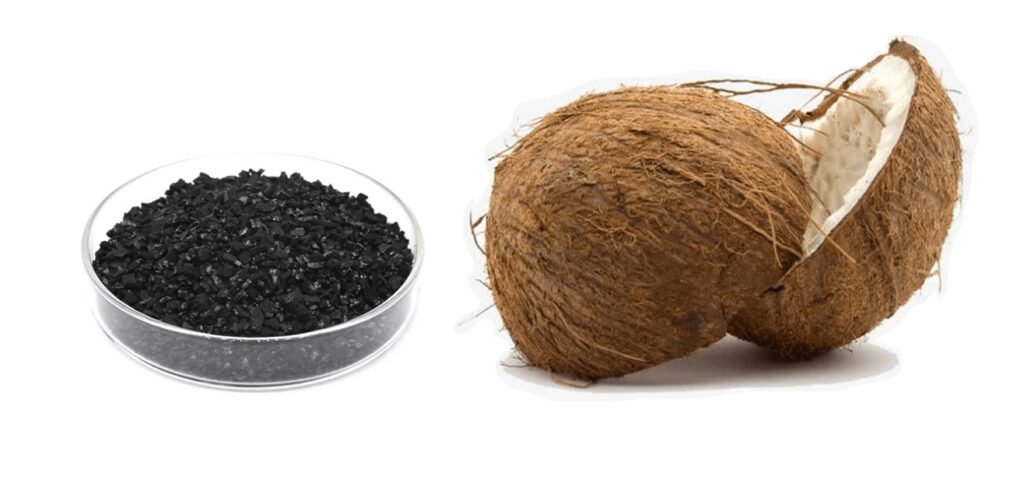
Although activated carbon appears to be a simple black porous material, it plays a critical role in modern gold production.
From cyanide leaching to gold bar production, coconut shell activated carbon supports the entire gold recovery chain through its:
- Excellent adsorption capacity
- High mechanical strength
- Chemical stability
- Superior regeneration performance
As global gold demand continues to increase and more complex gold ores are developed, the demand for high-quality gold recovery activated carbon will remain strong.
At the same time, gold extraction technology continues to evolve, with innovations such as improved adsorption systems, enhanced desorption technologies, and more environmentally friendly recovery methods driving the industry toward higher efficiency and sustainability.
For gold mining companies, selecting the right activated carbon and establishing an optimized adsorption–desorption–regeneration management system are essential steps to improve gold recovery rates, reduce costs, and maintain competitiveness.
You can place an order or ask any questions, please feel free to contact at feronia@wit-stone.com | +86-15655559799