
Potassium Bicarbonate (KHCO₃): Comprehensive Guide to Industrial, Chemical, and Mining Applications
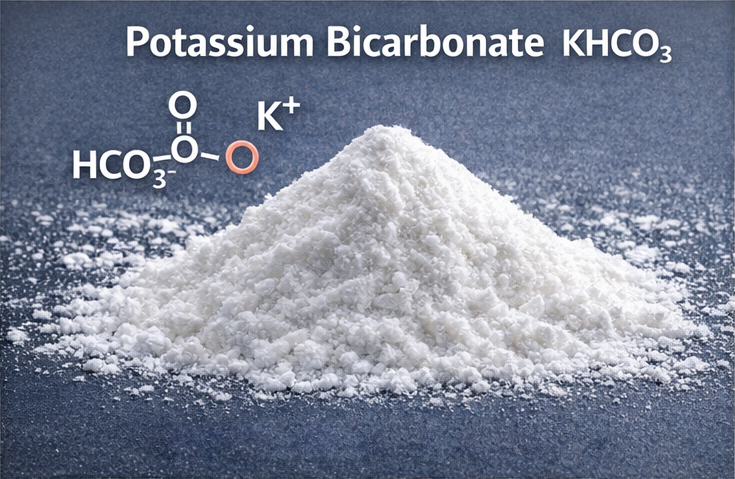
Potassium bicarbonate (chemical formula KHCO₃), also known as potassium hydrogen carbonate, is a white crystalline powder that is odorless and highly soluble in water. Its aqueous solution is mildly alkaline. As a single potassium salt, it consists of potassium ions (K⁺) and bicarbonate ions (HCO₃⁻), with a molecular weight of approximately 100.12 g/mol. When heated, potassium bicarbonate decomposes to release carbon dioxide and water, converting into potassium carbonate. This thermal decomposition behavior gives it particular value in industrial and chemical manufacturing processes.
Sodium Carbonate Anhydrous: Overview and Industrial Applications
Sodium Carbonate Anhydrous, with the chemical formula Na₂CO₃, is a widely used inorganic alkaline compound. It appears as a white or off-white, odorless crystalline powder that dissolves easily in water, producing a strongly alkaline solution. In the chemical industry, sodium carbonate anhydrous is also commonly referred to as soda ash. It is one of the most important basic chemical raw materials, available in grades ranging from industrial grade to high-purity reagent grade to meet diverse application requirements.
2026: A Pivotal Year for China’s Chemical Industry with Innovation and High-End Growth in Focus

Analysts indicate that 2026 is poised to be a pivotal year in the cyclical development of China’s chemical industry. The growth engines for China’s chemical industry are expected to increasingly derive from structural product development and deeper international market engagement. Stable development in traditional sectors will continue to safeguard consumption demand for basic chemicals, while rising demand for high-end chemical products — such as premium coatings, modified plastics, and high-end polyolefins — will support sustained growth.